
By kathrin winkler, Nova Scotia Voice of Women for Peace
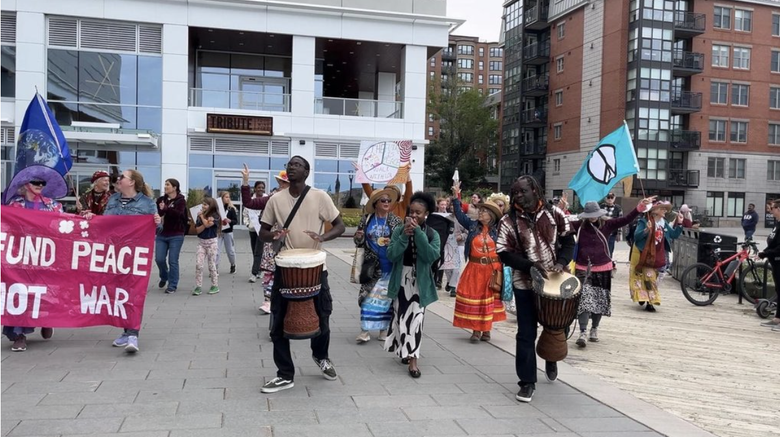
Walking for peace is a grassroots, visible, public call to action giving us hope to meet the challenge of living together without violence against one another and our Earth and all her creatures. Peace walks are just one way to jolt us into possibility, and participation is an inclusive invitation to share the path. To commemorate the International Day of Peace in Nova Scotia, we held a Peace Walk from the Peace Pavilion in Dartmouth to the Peace and Friendship Park in Halifax. The walk was organized by the Halifax Raging Grannies together with the local Girl Guides and Pathfinders; supported by Nova Scotia Voice of Women for Peace and the Ecology Action Centre, it was generously funded by the Mahatma Canadian Foundation for World Peace in Edmonton, Alberta. Peace is collaborative, and Canadian Gandhians are sharing their mandate of educating for peace and nonviolence by building the arc of justice from the Rockies to the Atlantic .
The Girl Guides chose the name “The Future is Peace- Walk with Us.” Last fall and winter NS Voice of Women for Peace members visited the Guides and shared grassroots peace-building history and activities taking place in Nova Scotia and beyond. We explored the history of peace walks together. Remarkable historic walks include Mahatma Gandhi’s famous Salt March for economic decolonization in 1930. The largest land redistribution (4.3 million acres) in history was a result of Vinoba Bhave’s years of walking for Indian land reform. On the anniversary of Dr. Martin Luther King’s assassination, countless peace walks are held to remind us of his unconditional commitment to civil rights and a community of care.
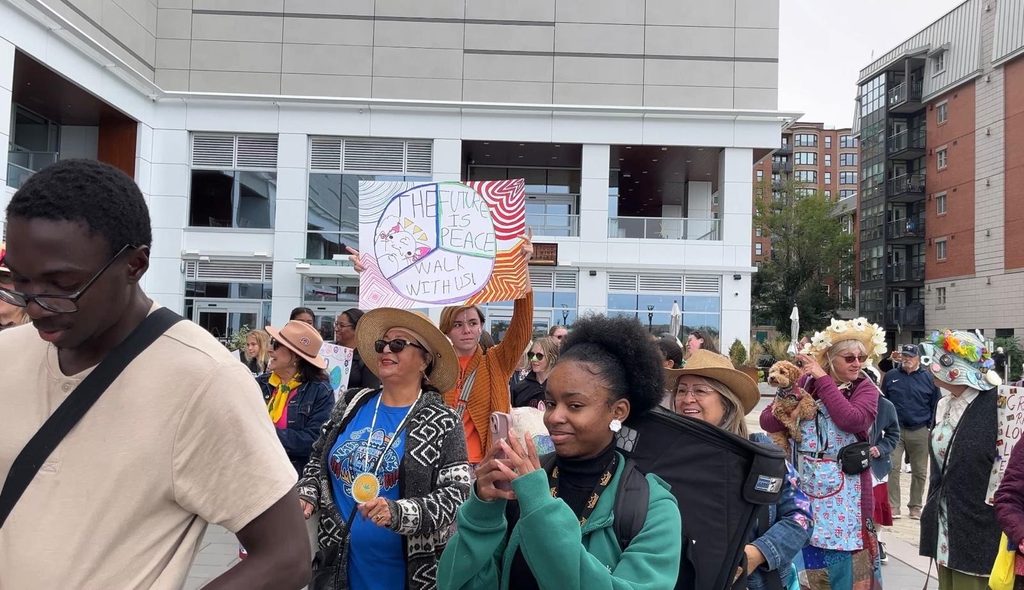
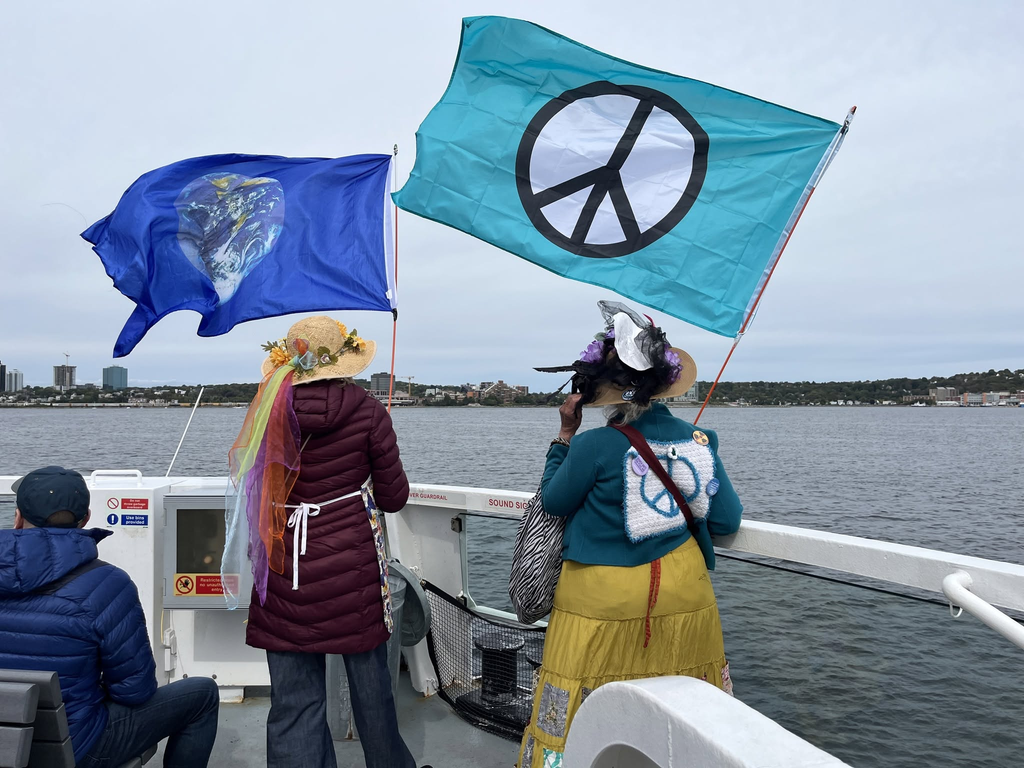
More recent history brings us closer to home. Elder Josephine Mandamin, Anishinaabe Elder known as Biidaasige-ba ‘the one who comes with the light’, walked around the Great Lakes from 2003 to 2017 to bring awareness to the problems of water pollution and environmental degradation on the Great Lakes and on Indigenous reserves in Canada. Mi’kmaq Elder Dorene Bernard with Patsy Stephens and Amy Maloney opened the Peace Walk with a water ceremony and blessing, and we honoured the memory of Grandmother Josephine. The intergenerational aspect of this particular peace walk was marvellous, and to open on the harbour front in Dartmouth in the shadow of the boarded-up Peace Pavilion and then travel together by ferry across these historic waters will be cherished by the more than 40 participants. Peace is an ongoing commitment, and the tradition of walking together has been revived. In Nova Scotia’s recent history, Canadian Voice of Women for Peace and the Women’s International League for Peace and Freedom organized peace walks led by Mi’kmaw water protectors from Pugwash to Halifax advocating for nuclear disarmament, and yes, justice and peace. We walked 80 km from Pugwash to Truro, beginning with a youth conference, to urge our government to sign onto the International Treaty on the Prohibition of Nuclear Weapons.
We crossed the harbour together, engaging with others along the way. Everyone we encountered was grateful for the positive message and possibility of peace in a more and more ruptured world. The beautiful hand-made posters carried by the girls were admired as we walked along the waterfront to Ghanian rhythms. We arrived to a lavish picnic in the park with peace songs, honour songs and brief speeches. There is joy in the air when peace is the purpose!
Please click here to visit our Nocturne Project this year!